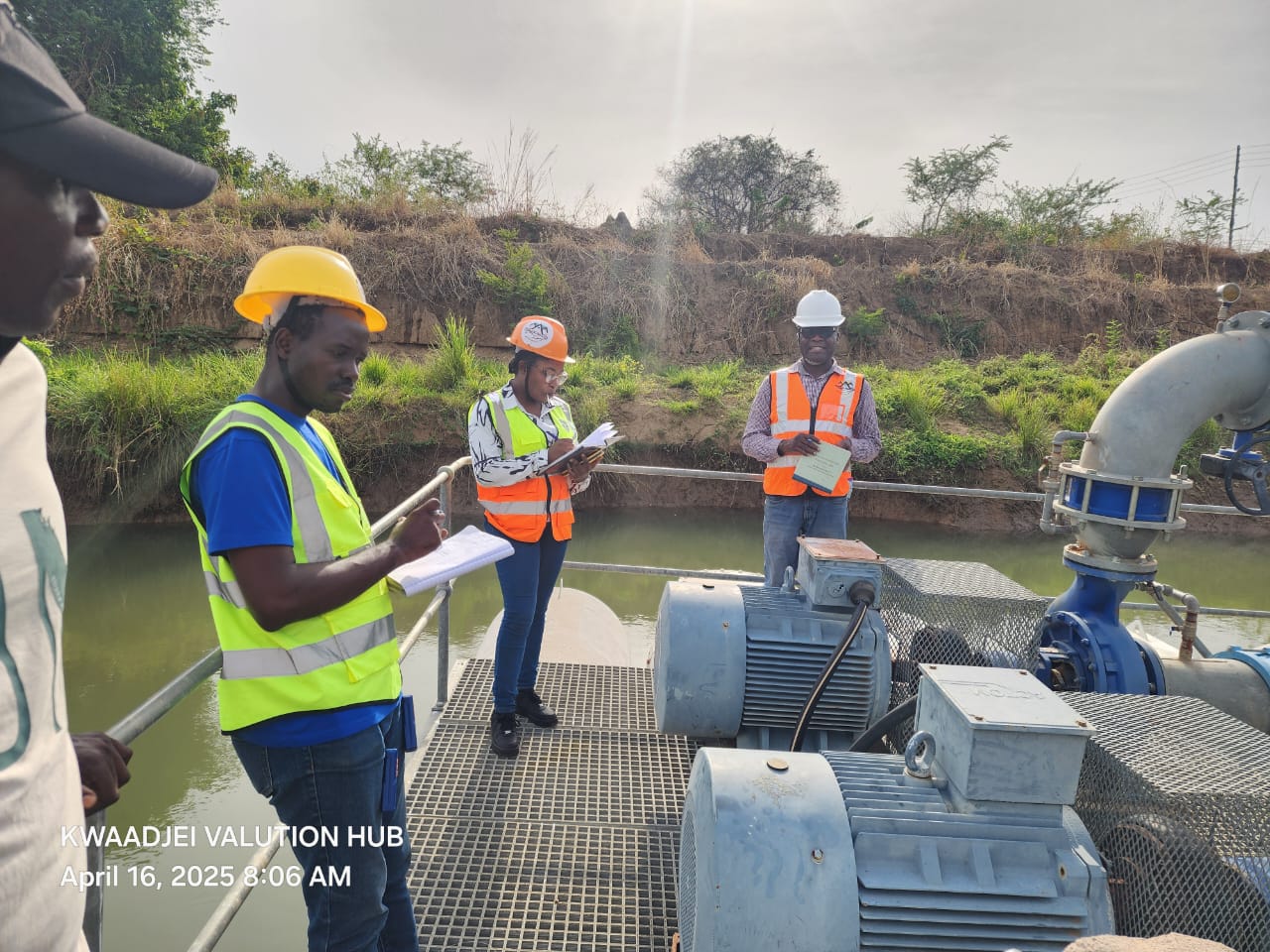
When business owners think of "valuation," they almost always think of their land and buildings. But for many industrial, manufacturing, and commercial businesses, the most valuable assets are the ones inside the building: the plant, machinery, and equipment (P&M).
Overlooking the value of your P&M is a critical financial error. It can lead to being under-insured, failing to secure adequate financing, or making poor decisions during a sale or merger.
As professional valuers with experience serving industrial clients like Persues Mining Ltd and MIGOP Mining Limited, we specialize in assessing these complex assets. Here’s why it's a non-negotiable for your business.
1. To Secure Asset-Based Financing
When you approach a bank (like OmniBSIC Bank or Derma Area Rural Bank PLC) for a business loan, your landed property isn't your only collateral. Your machinery, be it production lines, heavy-duty trucks, or specialized equipment, has significant value. A professional, defensible P&M valuation report gives lenders the confidence to extend credit based on the full value of your company's assets, often unlocking much-needed capital for growth.
2. For Accurate Insurance Coverage
This is the most common and dangerous pitfall. Many businesses insure their machinery based on its "book value" (original cost minus accounting depreciation) or, worse, a rough guess. Both are wrong.
- Book Value is an accounting-based number and has no relation to real-world cost.
- Market Value is what it's worth if you sold it today.
- Replacement Cost is what it would cost to buy a new, equivalent machine.
If your factory is under-insured based on book value and a fire occurs, your insurance payout will not be enough to buy new equipment, potentially putting you out of business. A P&M valuation provides the correct "Insurable Value" to ensure you are adequately protected.
3. For Accurate Financial Reporting (IFRS)
Modern accounting standards (like IFRS) require businesses to periodically "revalue" their assets to reflect their true and fair value on the balance sheet. This isn't just an accounting exercise; it provides shareholders, investors, and banks with a realistic picture of your company's financial health. An accurate asset register and valuation are essential for compliance and transparent reporting.
4. During Mergers, Acquisitions, or Business Sales
If you are planning to sell your business or merge with another, how do you value it? The building is only one part. The real value is often in its operational capacity. A P&M valuation is fundamental in:
- Determining the fair market value of all tangible assets.
- Allocating the purchase price across different asset classes.
- Giving the buyer confidence in what they are acquiring.
How is Plant & Machinery Valued?
Unlike houses, machinery valuation is highly specialized. A valuer must be an expert in assessing:
- Physical Condition: Age, state of repair, and maintenance history.
- Functional Obsolescence: Is the machine still efficient, or has new technology made it slow and expensive to run?
- Economic Obsolescence: Has demand for the product this machine makes declined?
Using established methods (like the Cost, Market, and Income approaches), a valuer provides a defensible report that can withstand scrutiny from banks, insurance companies, and auditors.
Conclusion: Don't Guess Your Asset's Worth
Your plant and machinery are the engines of your business. Understanding their true value is essential for strategic planning, risk management, and financial health. Don't rely on accounting book values—get a professional, independent valuation.
Need to value your business's plant, machinery, or equipment? for a specialized consultation, contact Kwaadjei Valuation Hub today